
Last updated November 23, 2026
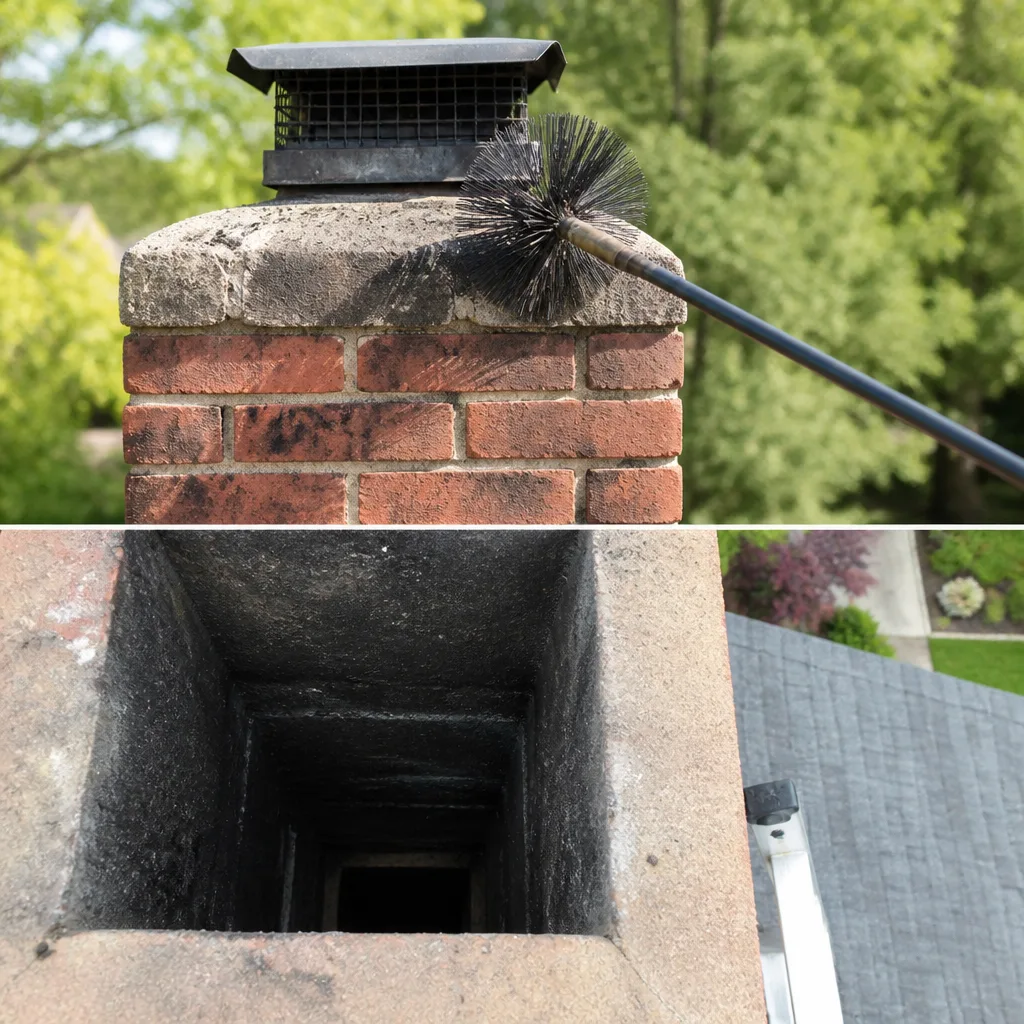 Sweep & inspection
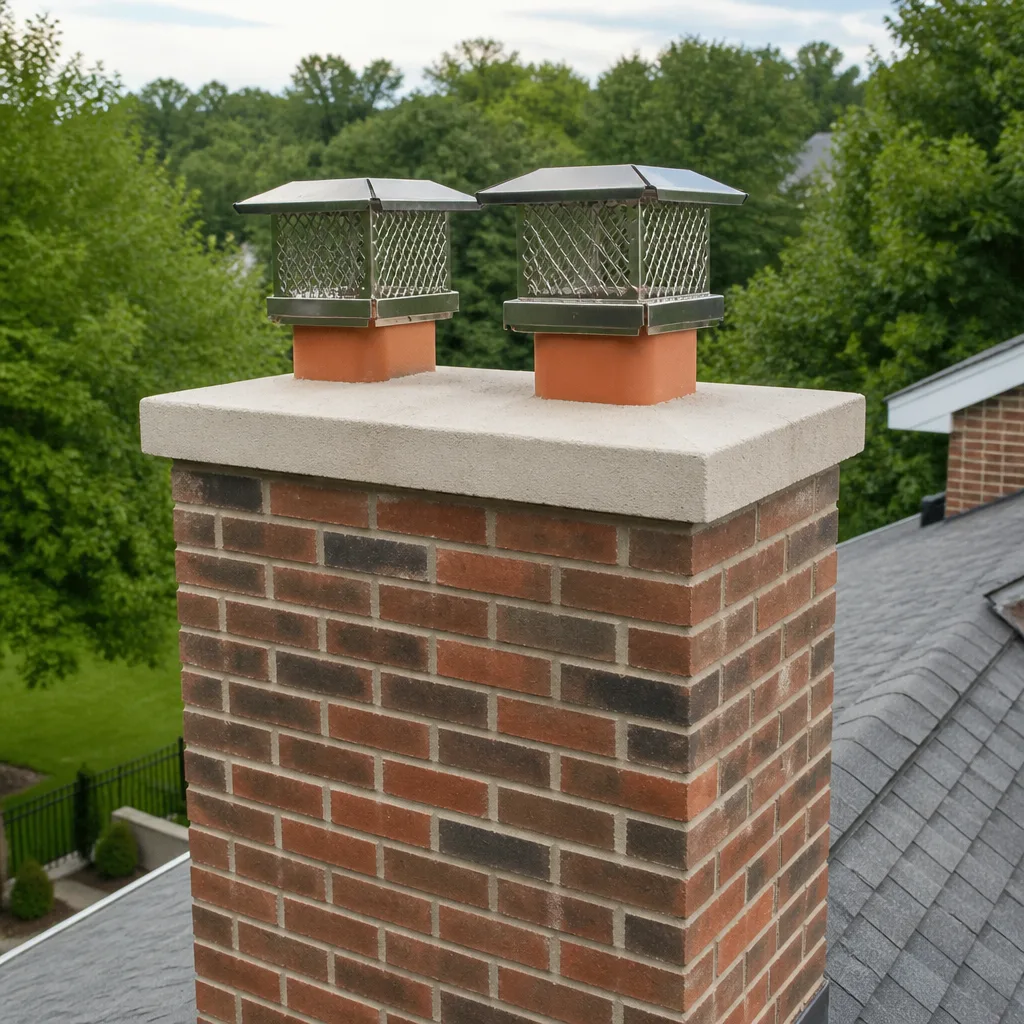 Caps & crowns
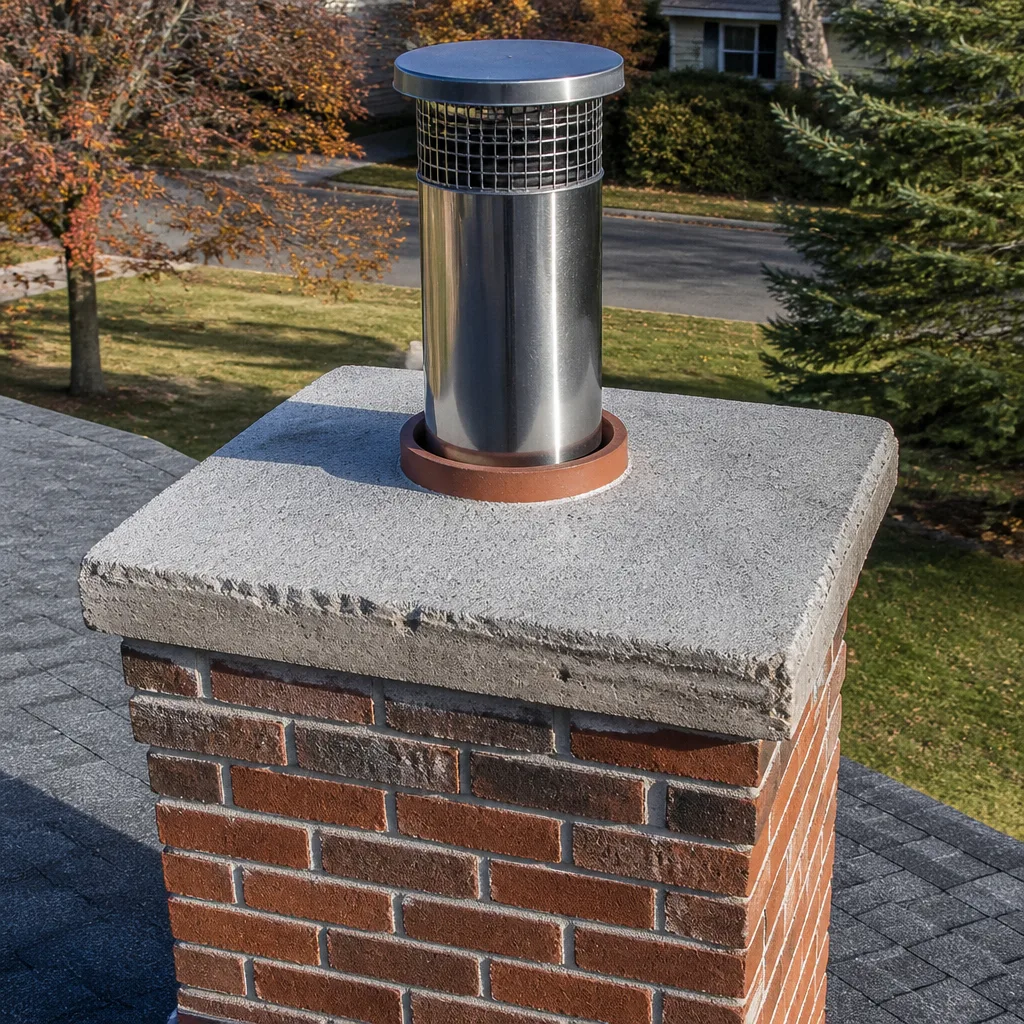 Flue relining
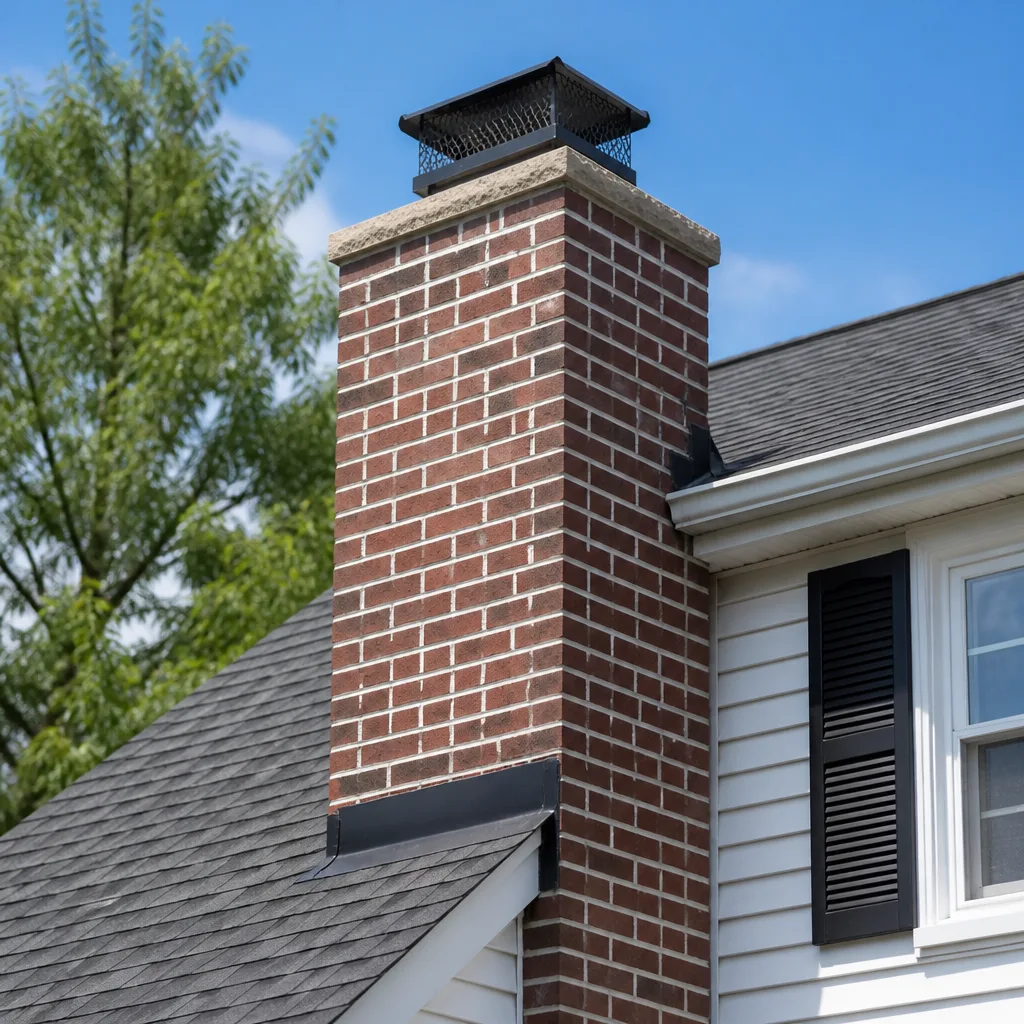 Masonry repair
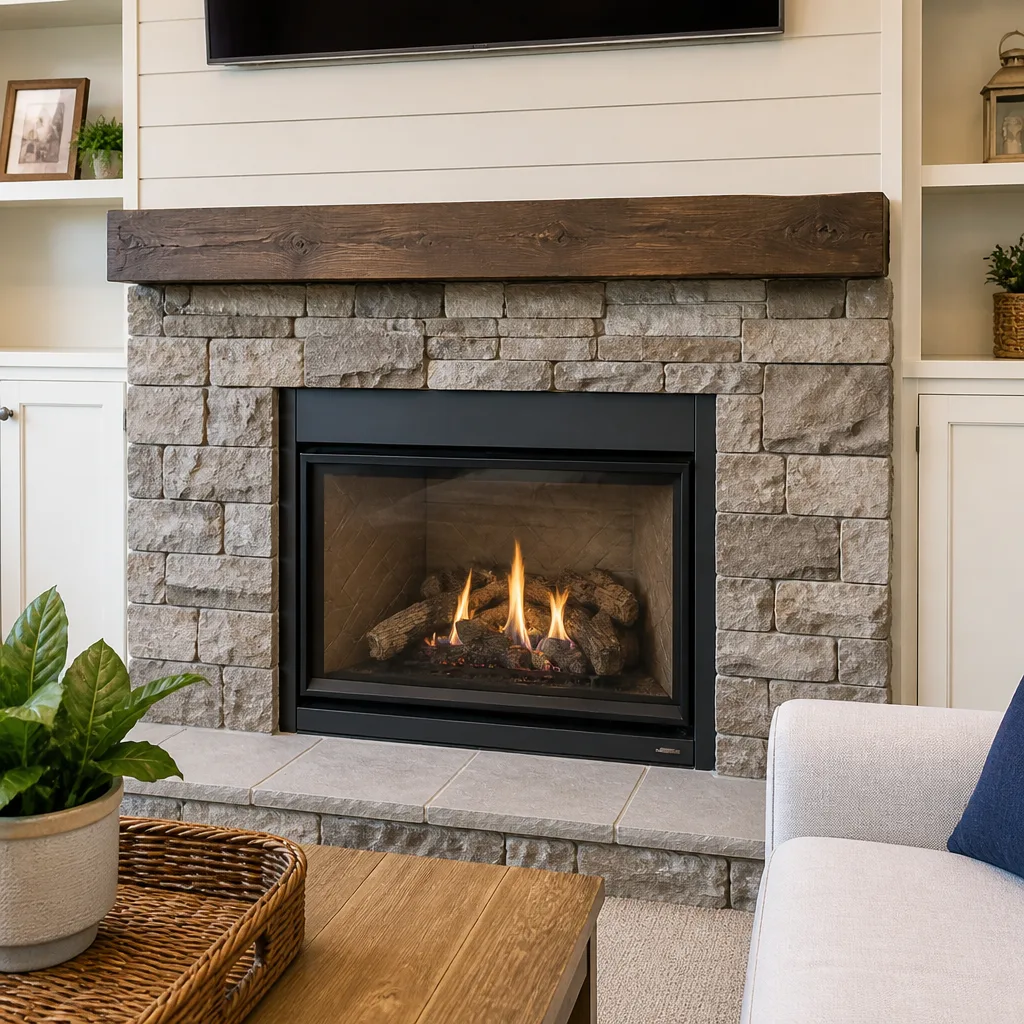 Gas fireplace service
Level 1 sweep and inspection to the NFPA 211 annual standard - flue, crown, cap, and flashing checked and photographed
Chimney sweep logs do not sweep chimneys. They loosen some creosote - which then falls where a brush and vacuum still have to collect it.
Chimney Cleaning Cost Breakdown: The Cottonwood Heights Homeowner’s Reference for 2026
When two chimney quotes for the same Cottonwood Heights home differ by $150, it’s rarely because one company is gouging you. It’s because they’re quoting different jobs. One price is a brush-and-go sweep. The other includes a Level 1 inspection, a camera look at the flue, a cap check, and a written report of what the technician actually found. On paper the two services share a name. In practice only one of them tells you whether your flue is safe to burn in.
This guide breaks down what chimney cleaning actually costs in Cottonwood Heights, what drives those numbers up or down, and how to compare quotes without a decade of trade knowledge. You’ll see line-item ranges for the sweep itself, the add-ons that surface mid-job, and a realistic five-year budget for a typical home in this valley.
Quick Answer
Chimney cleaning in Cottonwood Heights typically costs between $180 and $350 for a standard sweep, and $250 to $450 when a Level 1 inspection is bundled in. Heavier creosote, a damaged flue liner, or a cap and crown job can push the total past $600. The written estimate sets the final price, and estimates are free.
Styles & brands we work with
- Sweep & inspection
- Caps & crowns
- Flue relining
- Masonry repair
- Gas fireplace service
Table of Contents
- Why Chimney Cleaning Quotes in Cottonwood Heights Vary So Much
- Baseline Sweep vs. Sweep Plus Inspection: What a Price-Leader Quote Leaves Out
- How Creosote Stage Changes the Price
- Line-Item Costs for Add-Ons That Show Up During a Cleaning
- Why Professional-Grade Materials Cost More Than Commodity Alternatives
- Building a Realistic Five-Year Chimney Budget for a Cottonwood Heights Home
- What Cottonwood Heights Weather Does to a Chimney
- How to Compare Two Chimney Quotes Without Getting Burned
Why Chimney Cleaning Quotes in Cottonwood Heights Vary So Much
In our experience across Cottonwood Heights, the single biggest driver of a price gap is scope, not labor rates or overhead. Two technicians can spend an hour in the same flue and bill very differently because one is sweeping and the other is diagnosing.
Here’s the pattern we see repeatedly. A low bid is a straight brush sweep: wire brush down the flue, vacuum the firebox, hand the homeowner a receipt. That’s a legitimate service and it has a real cost. What it does not include is any examination of the flue liner, the smoke chamber, the cap, the crown, or the flashing. None of those show up in the price because none of them are being looked at.
A bid that runs higher usually bundles a Level 1 inspection with the sweep. That means the technician goes onto the roof and into the firebox with a flashlight and, ideally, a camera, then writes down what they found. In a valley where homes burn a lot of wood through a long heating season, the condition findings matter more than the sweep itself. The inspection is what tells you whether the flue is safe to keep using.
There are other variables that move the number:
- Access. A roof-mounted flue that requires a walk across a steep pitch takes longer than one reachable from a ladder at the eave.
- Fireplace type. A straight wood-burning insert is faster to clean than a masonry fireplace with an offset flue and a smoker’s shelf.
- Condition. A flue that hasn’t been touched in years takes more passes and more damage control than one swept annually.
- Add-on parts. A missing cap or a cracked crown that shows up during the visit changes the job from cleaning to cleaning plus repair.
The honest way to read any quote in Cottonwood Heights is to ask what’s included, not just what it costs. A $150 sweep that leaves you knowing nothing about your flue is worth less than a $350 job with a written inspection report attached. Our own Chimney Sweep Cottonwood Heights service is scoped that way for exactly this reason.
Baseline Sweep vs. Sweep Plus Inspection: What a Price-Leader Quote Leaves Out
A baseline sweep in Cottonwood Heights runs roughly $180 to $300. Add a Level 1 inspection and you’re typically in the $250 to $450 range. The gap is $70 to $150, and it’s what separates a “clean” chimney from a “known” chimney.
What the price-leader quote leaves out is not a trick. It’s simply outside the scope of a sweep. Here’s what a sweep alone never tells you:
- Whether the flue liner has cracked, spalled, or separated at the joints.
- Whether the smoke chamber is sloped correctly or has ridges where creosote collects.
- Whether the crown is shedding water into the masonry below it.
- Whether the cap is present, intact, and properly sized.
- Whether the flashing at the roofline has pulled loose from the chimney.
- Whether the firebox bricks are sound or have joint gaps opening up.
That list is the actual value of an inspection. Every item on it becomes a repair option later, and every one of them is cheaper to address early than after a season of water infiltration. A chimney sweep that includes a diagnostic look is the service that catches problems while they’re small.
A Level 1 inspection is also what a real professional uses to tell you when nothing is wrong. We tell homeowners outright when the flue looks fine and they can wait a year. That’s not a sales pitch, it’s the finding. You should never be told you need a liner you can’t verify for yourself, and a camera inspection with photo evidence is how you avoid that.
What a Level 1 Inspection Covers
A Level 1 inspection is visual and non-invasive. The technician examines the readily accessible portions of the chimney, the firebox, the damper, and the flue from the firebox up and from the roof down. It requires no tools beyond a flashlight and a camera. It’s the appropriate inspection every year you burn, and it’s what should be bundled with a routine sweep.
When a Higher-Level Inspection Makes Sense
If a cleaning turns up heavy creosote, a flue that looks compromised, or you’ve had a chimney fire, a Level 2 inspection with a full camera scan is the right next step. That’s a bigger job and costs more, but it’s the only way to see a flue defect that doesn’t show up visually from the top or bottom.
How Creosote Stage Changes the Price
Creosote is the residue that builds up on a flue as wood smoke cools. It comes in three recognizable stages, and each requires a different cleaning method with a different price behind it. Creosote stage is the second-biggest driver of a chimney cleaning quote in Cottonwood Heights after scope.
Stage 1: Soot and Light Fluff
Stage 1 is the light, dusty, flaky buildup a well-seasoned wood supply produces. A standard wire-brush sweep removes it without much effort. This is the easiest and cheapest cleaning you’ll ever have, and it’s what an annual sweep is designed to catch. Typical range: $180 to $280.
Stage 2: Hardened, Crusty Creosote
Stage 2 is a hardened, flaky layer that clings to the flue walls and doesn’t come off with a brush alone. Removing it requires rotary cleaning with a powered whip or a specialized tool that scrapes the deposits down. The job takes longer, the tooling costs more, and the cleanup is more involved. Typical range: $280 to $450.
Stage 3: Glazed, Tar-Like Creosote
Stage 3 is the dangerous one. It appears as a glazed, tar-like coating baked onto the flue, and it’s highly combustible. It cannot be brushed off and cannot be safely ignored. Removing stage 3 creosote often requires chemical treatment protocols that soften the glaze before removal, sometimes over multiple visits. This is also the stage where the risk of a chimney fire is real and where the flue liner itself may already be damaged. Typical range: $400 to $800 or more depending on flue length and condition.
If a technician finds stage 3, the conversation shifts from cleaning to safety. That’s not an upsell; it’s a genuine hazard. A camera view of a glazed flue is something we show the homeowner before recommending anything, because a stage 3 finding is exactly the kind of thing a price-leader sweep never catches.
Line-Item Costs for Add-Ons That Show Up During a Cleaning
Most chimney cleaning bills are just the sweep. But when a technician is on the roof anyway, they tend to find the small structural issues a Cottonwood Heights home accumulates over a heating season. Here’s what those add-ons typically cost:
- Chimney cap replacement: $150 to $400 installed, depending on cap size and material. A missing or rusted-through cap is the primary entry point for water.
- Crown coat or crown repair: $300 to $700. The crown is the concrete top of the chimney, and a hairline crack lets water seep into the masonry below.
- Flashing reseal: $200 to $500. Flashing is the metal seal where the chimney meets the roof. When it pulls loose, water tracks down the chimney and into the ceiling.
- Liner repair or relining: $1,500 to $4,500+ for a full reline, less for a spot repair. This one deserves its own camera evidence, and no honest technician recommends it without showing you the defect.
- Damper or firebox repair: $150 to $600 depending on the issue.
Two observations from our experience. First, the cap and the crown are the two items that come up most often in Cottonwood Heights, because water intrusion is the number one cause of long-term chimney damage in this climate. Second, none of these add-ons should be recommended on the spot without a clear photo or a camera finding. If a technician tells you your liner is shot and you can’t see it, ask to see the evidence. A professional will show you.
How to Sequence Add-Ons for Value
You don’t have to fix everything at once. A sensible order of operations:
- Safety-critical repairs first: liner, damper, firebox.
- Water-management repairs next: crown, flashing.
- Cap last, but before the next wet season.
If the flue is sound and only the cap is missing, that’s a $150 repair that prevents a $2,000 masonry job two years from now. Worth doing now.
Why Professional-Grade Materials Cost More Than Commodity Alternatives
When a repair bill comes in higher on one quote than another, the material line is often the reason. And material is where a chimney job either lasts or doesn’t.
Professional-grade product lines cost meaningfully more than the commodity hardware-store alternatives, and the difference is not marketing. It’s service life. A cap that rusts out in five years and a cap that holds up for an actual lifespan are not the same product. A crown that’s mixed from a bag of generic mortar and a crown applied with a proper bonding product designed for masonry don’t shed water the same way. A liner that’s the right alloy for wood and one that’s cheaper but not designed for the application are a safety difference, not a cosmetic one.
That’s why we work with DuraFlex liner systems, HeatShield chimney resurfacing, Gelco caps, Olympia Chimney components, Famco venting products, and Copperfield supplies rather than picking up whatever’s on a shelf. These are the same brands trusted by chimney specialists nationally. Here’s what the difference buys you:
- HeatShield resurfacing lets us repair a damaged flue tile without a full reline in many cases, which is a real cost saving over the alternative.
- DuraFlex liner systems give a reline job a lifespan measured in decades, not years.
- Gelco caps hold up to freeze-thaw cycles and sun exposure that chew through cheaper metal.
- Olympia Chimney and Famco components are engineered for the specific flue conditions we see here, not adapted to them.
- Copperfield supplies bring professional-grade masonry and crown work to a job that needs it.
The HeatShield point is worth pausing on. If your flue has surface damage but the structure underneath is intact, HeatShield resurfacing can extend liner life without the cost of full relining. It’s a repair option most basic sweep companies can’t offer because they don’t do repair work at all. You can read more about our chimney repair capabilities if relining turns out to be the right answer for you.
Building a Realistic Five-Year Chimney Budget for a Cottonwood Heights Home
A chimney is not a one-time purchase. It’s a piece of infrastructure that needs annual attention and periodic repair, and the homeowners who plan for it spend less than the ones who react to failures. Here’s a sensible five-year budget framework for a typical Cottonwood Heights home with a wood-burning fireplace used regularly through the heating season.
Year 1: Baseline Reset
Assume a sweep plus Level 1 inspection ($250 to $450) and, most likely, one add-on. Homes in this valley tend to need a cap or a crown coat in the first visit if they haven’t been serviced recently. Budget $400 to $900 for year one, with contingencies if the flue shows real damage.
Years 2 to 5: Annual Maintenance
Once the baseline is established, each subsequent year is a sweep plus inspection at roughly $250 to $450, plus $0 to $400 in small repairs. Budget about $400 per year on average. That assumes you’re burning well-seasoned wood and you keep the cap intact.
The Contingency Bucket
Set aside a separate line for major work. A reline is a $1,500 to $4,500 event, and it doesn’t happen on a schedule. It happens when the existing liner fails. The way to avoid an unplanned reline is to catch a damaged liner early through annual inspection, which is exactly what the bundled inspection is for.
Total Five-Year Budget
A realistic total for routine chimney care over five years, in a Cottonwood Heights home with a regularly used fireplace, is roughly $2,000 to $2,800. A home with deferred maintenance or a failing liner can run significantly higher. The difference between the two scenarios is almost always whether the homeowner was inspecting annually or waiting for a problem to show up as smoke in the living room.
Where Homes in This Valley Fall
Cottonwood Heights has a mix of older masonry fireplaces and newer construction with inserts. Older homes tend to have the higher budgets because their flues have had more exposure to moisture and freeze-thaw cycles. Newer homes typically land on the lower end for the first several years, then start climbing once the crown and cap reach the end of their service life.
What Cottonwood Heights Weather Does to a Chimney
The climate along the east bench of the Salt Lake Valley is hard on masonry. Long heating seasons mean more burn hours and more creosote accumulation. Cold nights and warm afternoons push the chimney through repeated freeze-thaw cycles, and any water that gets into the masonry expands when it freezes and cracks the material it’s in. That’s why water is the number one cause of long-term chimney damage in Cottonwood Heights, and why a cap and a crown in good condition are not optional.
Wood smoke behaves differently in a cold flue. When the flue is warm, smoke rises and exits cleanly. When the flue is cold at the start of a burn, smoke cools before it reaches the top and deposits creosote on the way out. Cottonwood Heights homeowners who burn in the morning after a cold night generate more of that deposition than someone burning in a warmer climate. Practically, that means creosote stage can climb faster here than the same number of burns would produce in a milder place.
The other climate factor is air quality. There are days during the winter when burning restrictions are in place along the Wasatch Front. Communities in this area sometimes operate on voluntary no-burn days when the inversion holds. It’s worth checking local air quality guidance before lighting a fire on a still winter day, both for the community and because your chimney is meant to vent smoke, not to make the neighborhood air worse. Related to this, we get questions about fireplace repair after a heavy burn season ends, when a damper or firebox has taken more stress than usual.
How to Compare Two Chimney Quotes Without Getting Burned
The single most useful habit when comparing chimney quotes in Cottonwood Heights is to ask a short series of questions of each bidder. The company that answers them clearly is the one to trust.
- Does the quote include an inspection? If not, ask what a Level 1 inspection costs separately. It’s often $70 to $150 added.
- Will I get a written finding? A report, even a short one, that lists what was checked and what was found. If the answer is “we’ll tell you,” push for written.
- Is the estimate free? Ours is. Estimates should be.
- What’s the warranty on any repair? Materials and labor both matter.
- Which brands are you using? If the answer is “whatever we have on the truck,” that’s a signal about service life.
One more: ask the company to show you the camera evidence for any recommendation over $300. A chimney sweep who finds a defect should be able to point to the photo. If they can’t, ask for a second look. Any honest company will respect the question.
Two other questions deserve to be in the list. Ask whether the company handles repairs in-house or sends you to a second contractor. One company that does cleaning, inspection, and repair in a single visit is easier to coordinate and less likely to leave a finding unresolved. And ask whether the quote is a flat price agreed before the work starts, or a per-hour rate. A flat-price sweep takes the surprise out of the bill.
Common Mistakes to Avoid
- Comparing a sweep to a sweep plus inspection as equals. The $150 gap usually reflects an additional service, not overcharging. Ask what’s included before you compare the numbers.
- Accepting a major repair recommendation without camera evidence. Liner replacement and masonry work run into the thousands. If you can’t see the defect in a photo, you can’t verify the recommendation is necessary. Ask to see it.
- Skipping the annual sweep because “it looks fine” from the fireplace. The part of the flue you can see from the firebox is not the part that’s a problem. Creosote accumulates above the damper, and that’s out of view.
- Burning green or unseasoned wood. Wet wood cools the smoke and accelerates creosote deposition. In a Cottonwood Heights climate with a long heating season, that pushes you toward stage 2 faster than necessary.
- Ignoring the cap because it’s “just aesthetics.” A missing or rusted cap lets rain and snowmelt straight into the flue. That water finds its way into the masonry and is the single most common cause of long-term chimney damage in this valley.
- Booking the cheapest quote and never getting a written finding. A $150 sweep with no report leaves you no closer to knowing whether your flue is safe. The whole point of the annual visit is what you learn from it.
- Deferring the crown repair. A hairline crack in the crown looks negligible and costs a few hundred dollars to fix. Left alone across a few freeze-thaw cycles, it becomes a masonry repair several times the price.
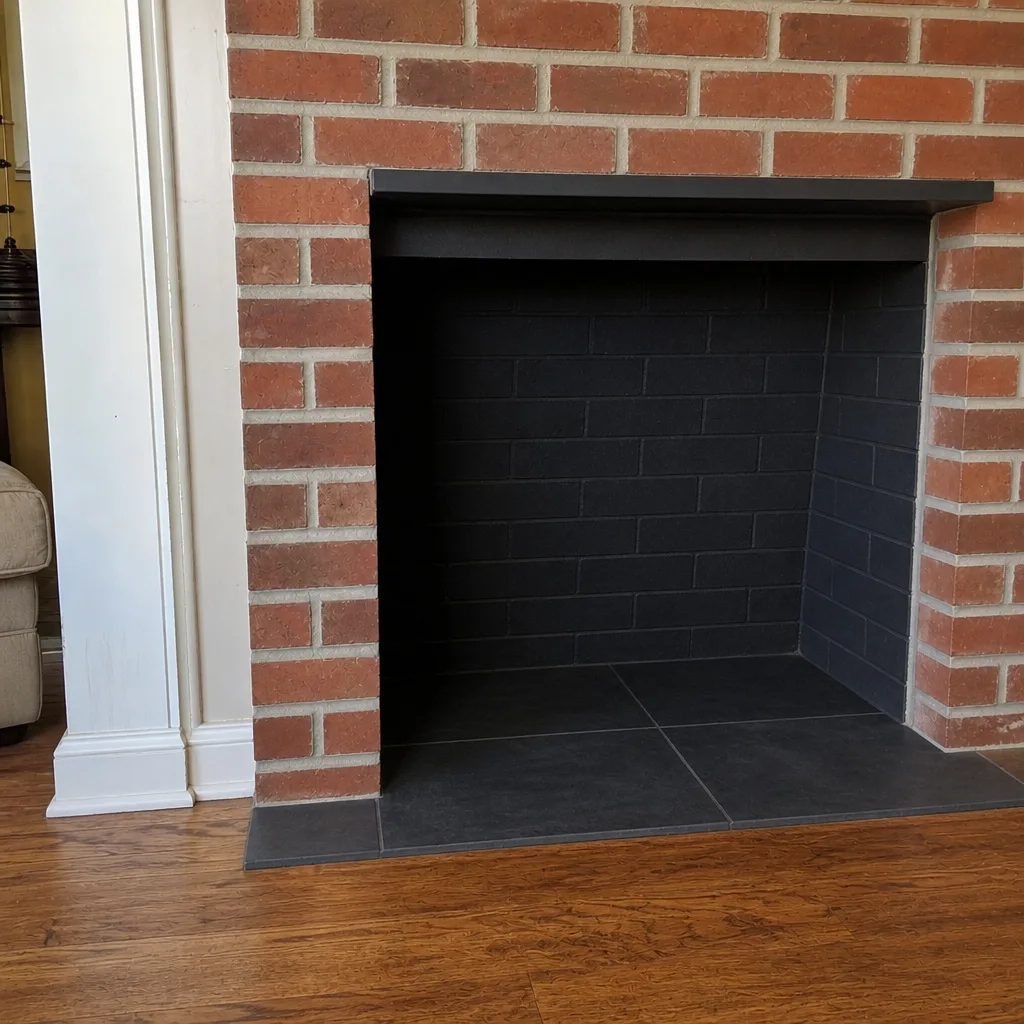
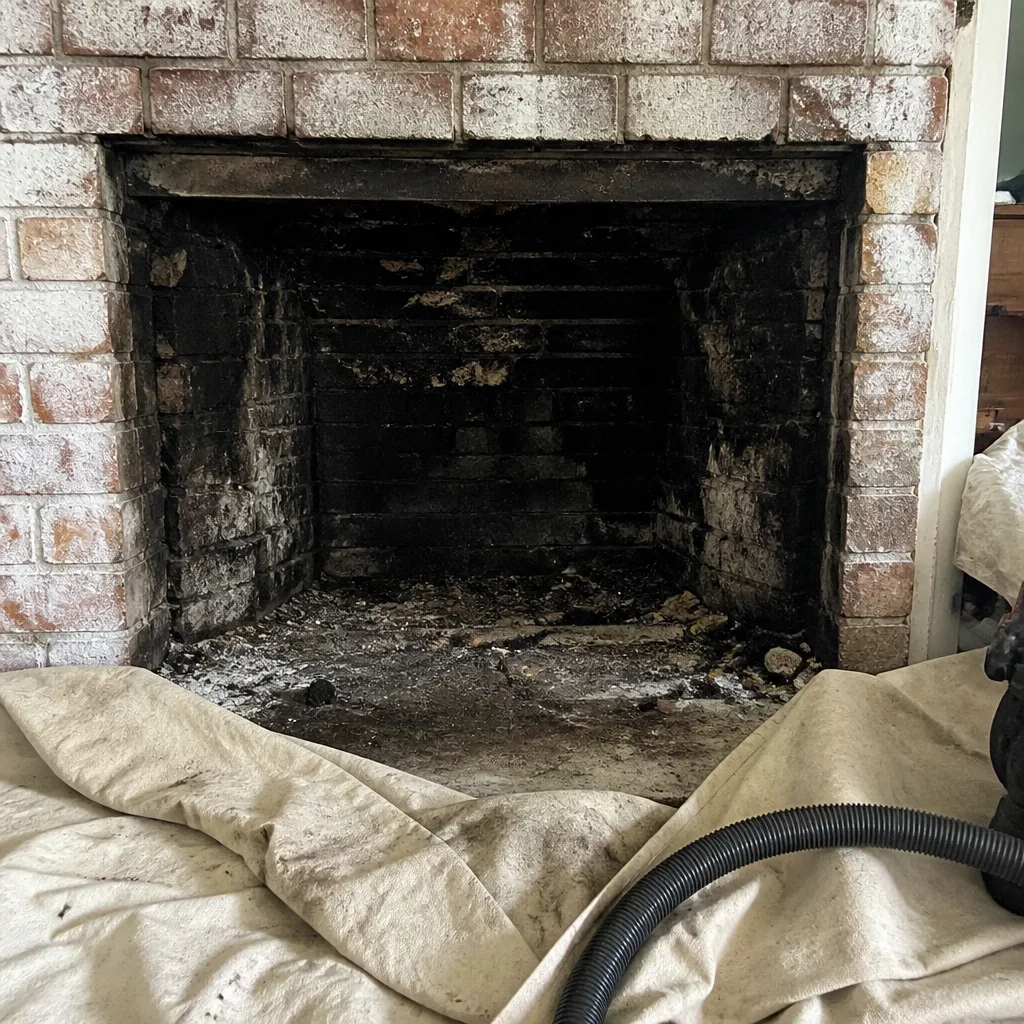
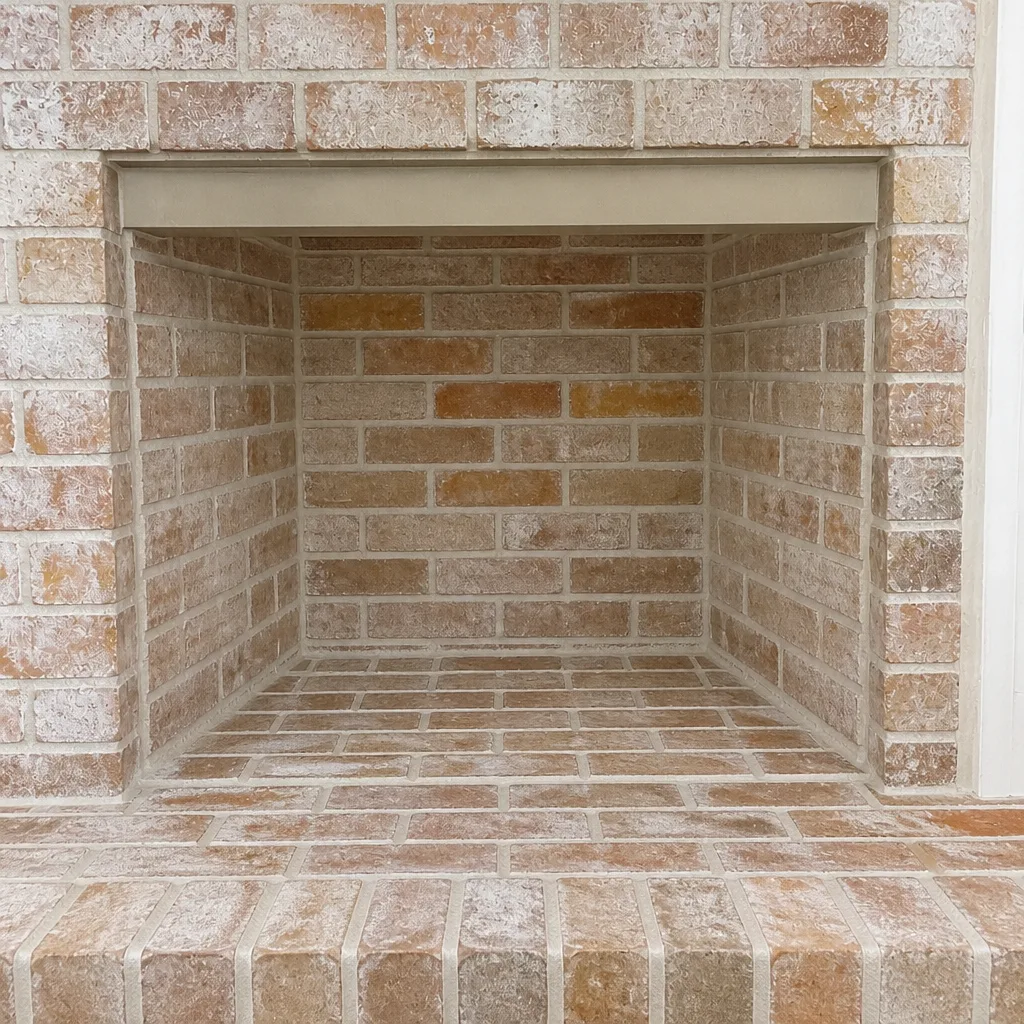
See the difference
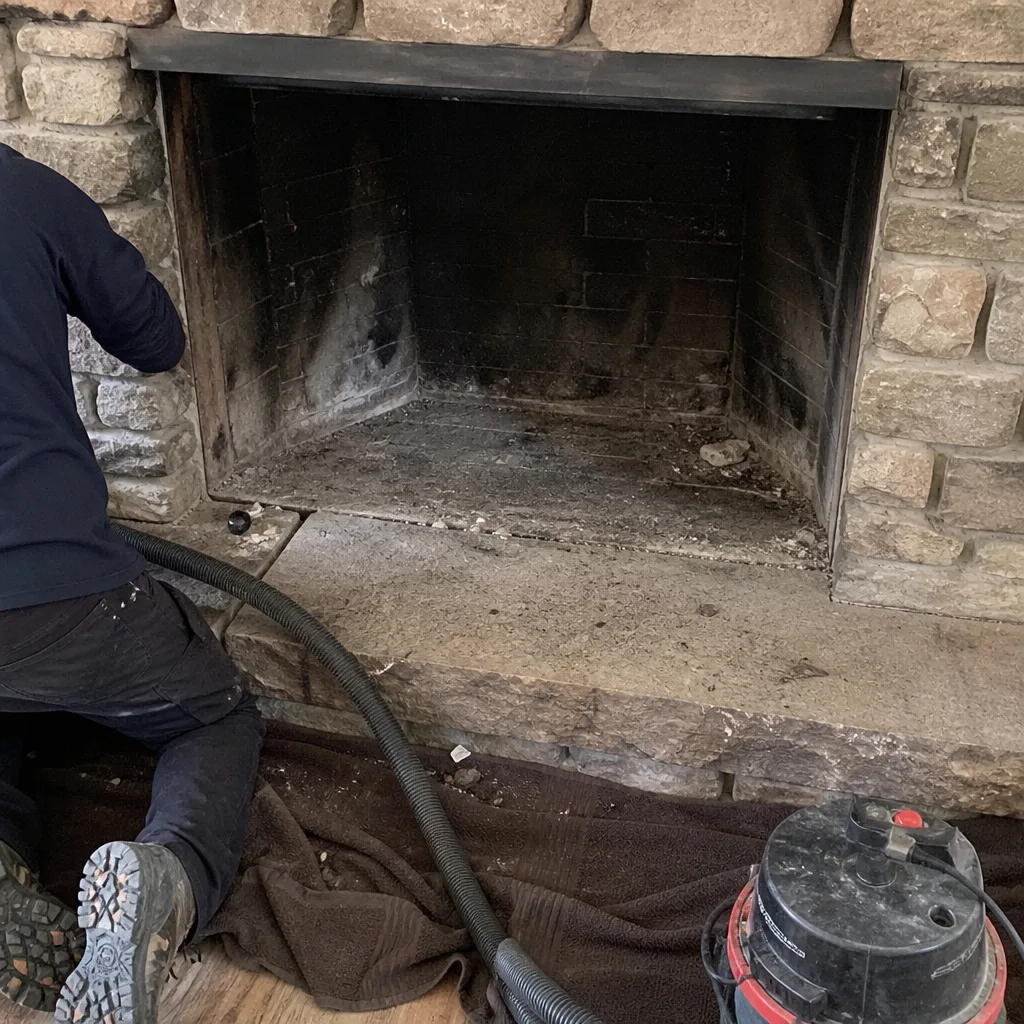 Before
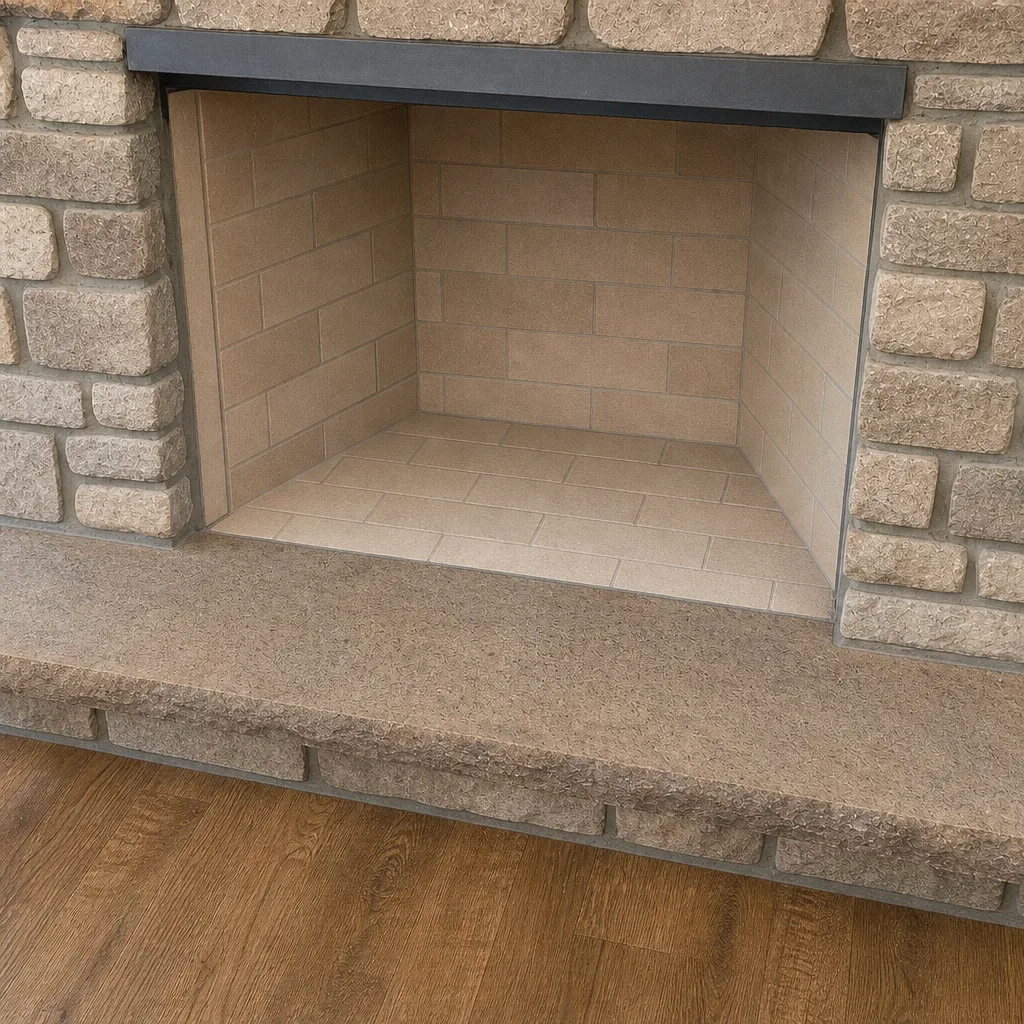 After
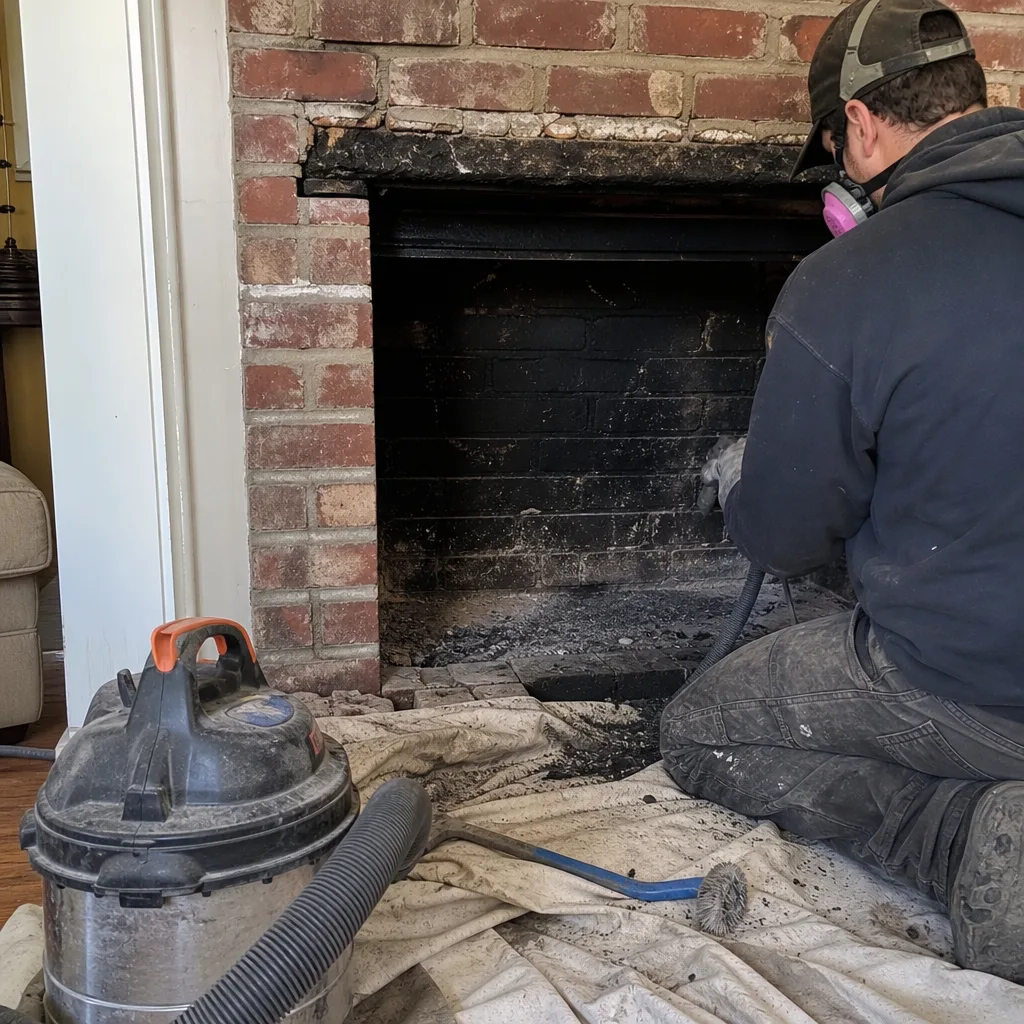 Before
 After
 Before
 After
When to Call a Professional
Some situations are clearly a call. A strong creosote smell in the house during the off-season, smoke rolling into the living room when you open the damper, a visible crack in the firebox bricks, or any evidence of a chimney fire (including damage you can’t see but know happened) all warrant a professional visit before you burn again. In a home that’s been in service for years without a sweep, the call is overdue regardless of how the fireplace looks.
The safety case is simple. Creosote is combustible, and a heavy accumulation can ignite and send a chimney fire up the flue. Carbon monoxide is a real risk when a flue is blocked or a liner is compromised, because exhaust that should leave the house has nowhere else to go. These are reasons to act, not reasons to panic. Most Cottonwood Heights homes we look at are in good shape and need only routine cleaning. The point of the annual visit is to keep it that way.
Chimney Sweep Cottonwood Heights offers free estimates in Cottonwood Heights. Call (866) 589-3511. We answer 24/7, with fast dispatch from 7am to 7pm, Sunday through Friday.
Frequently Asked Questions
A standard sweep in Cottonwood Heights typically runs $180 to $350, and a sweep bundled with a Level 1 inspection usually lands between $250 and $450. Heavy creosote, a damaged liner, or structural add-ons can push the total higher. The written estimate sets the final price, and there’s no charge for the estimate. Call (866) 589-3511 for an exact quote.
Not always, and a recommendation for a new liner should come with camera evidence you can see. Many flues can be resurfaced instead of relined, using HeatShield to restore damaged flue tiles without the cost of full relining. If a technician tells you the liner is failing and you can’t see the defect, ask to see the photo. A real professional will show you. Call (866) 589-3511 if you want a second look.
Once a year for a home that burns wood regularly through the heating season, which is the standard recommendation for a well-used fireplace. Homes that burn less frequently may stretch to every other year, and a gas appliance needs an annual inspection even if a full sweep isn’t always required. Cottonwood Heights homes with long burn seasons generally benefit from annual service. Call (866) 589-3511 to book one.
Creosote keeps building, and it moves from a stage 1 residue that brushes off easily to a hardened stage 2 or glazed stage 3 coating that needs rotary or chemical treatment. The flue also goes uninspected, so a small crack or a loose cap can go unaddressed through a full winter of water exposure. Neither outcome is dramatic immediately, but both cost more to fix than a routine cleaning. Call (866) 589-3511 for an estimate.
Different scopes. A lower quote is usually a straight brush sweep. A higher quote typically includes a Level 1 inspection, a camera check, and written findings. Those are different jobs, and they’re worth different amounts. Ask each company what’s included before comparing the numbers. Call (866) 589-3511 and we’ll walk you through what our estimate covers.
Indirectly, yes. The long heating season here means more burn hours and faster creosote accumulation than in milder climates. Freeze-thaw cycles stress the crown and cap, and water intrusion is the most common cause of long-term chimney damage in this valley. That means a home here more often needs a repair add-on with a cleaning than a home in a warmer market would. All figures here are typical estimates; the written estimate sets the final price. Call (866) 589-3511 for an exact figure.
The Bottom Line
Chimney cleaning in Cottonwood Heights costs what it costs because of scope, creosote stage, and the condition of the flue itself, not because the market is unpredictable. A baseline sweep runs $180 to $350, a sweep plus Level 1 inspection runs $250 to $450, and add-ons like caps, crowns, and flashing reseals add a few hundred each. The single best way to keep your five-year cost down is to inspect annually and address small issues before freeze-thaw cycles turn them into masonry repairs. Professional materials matter too. A Gelco cap or a HeatShield resurfacing is not a luxury upgrade; it’s a design life difference. And when a technician recommends a repair, they should show you why in a camera image. Ask for it. That question alone separates honest quotes from the ones you should walk away from.
Call (866) 589-3511 for a free estimate on a chimney sweep, inspection, or repair in Cottonwood Heights.
Written by the team at Chimney Sweep Cottonwood Heights.